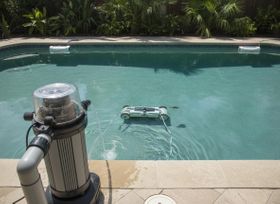
Why Your Pool Water Turns Green (and When to Call a Pool Service)

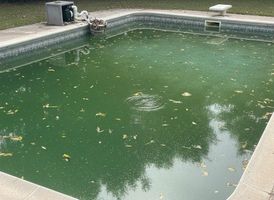
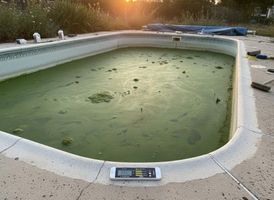
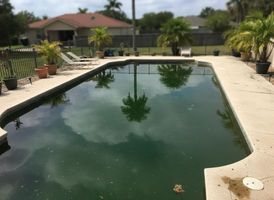
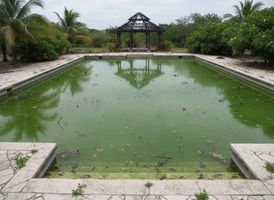
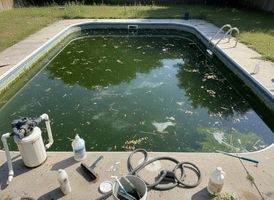
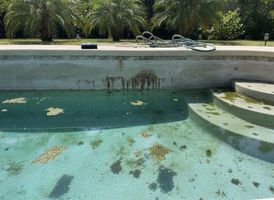
Nothing catches a homeowner's attention faster than looking outside and seeing a swimming pool that has turned green. One day the water appears clear, and within a few days it looks cloudy, dull, or covered with algae.

Many people assume the solution is as simple as adding more chlorine. In reality, green pool water often results from several problems working together, including poor water circulation, unbalanced chemistry, inadequate filtration, or equipment issues. Until you identify the root cause, adding more chemicals often leads to frustration and unnecessary expense.

Understanding why your pool water turns green helps you take the right steps early and avoid costly repairs. In this guide, you'll learn the most common causes of green pool water, when you might handle the problem yourself, and when it's time to call a professional pool service.
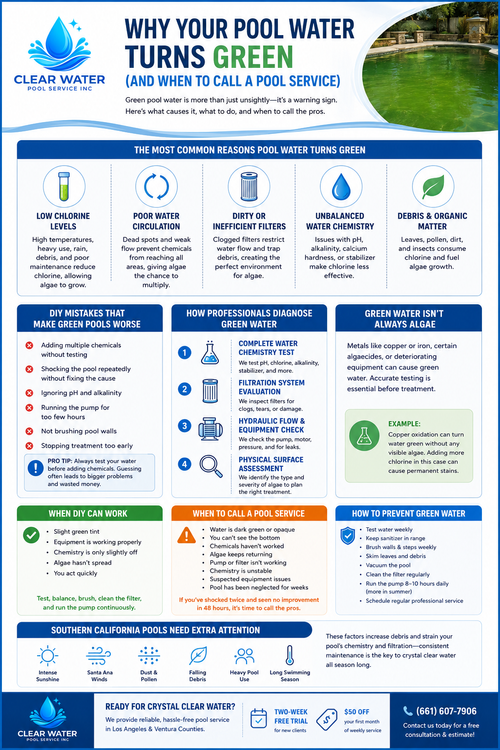
infographic - Why Your Pool Water Turns Green (and When to Call a Pool Service).png

Why Your Pool Water Turns Green (and When to Call a Pool Service)

The Most Common Reasons Pool Water Turns Green

Why-your-Pool-Water-Turns-Green-and-When-to-Call-a-Pool-Service-geotagged.jpeg

Low Chlorine Levels

Chlorine sanitizes your pool by killing algae, bacteria, and other contaminants. When chlorine levels drop too low, algae can begin growing quickly, especially during warm weather.

Several factors reduce chlorine levels, including:

  • · Hot summer temperatures
  • · Heavy pool use
  • · Rain or debris entering the pool
  • · Incorrect chemical balance
  • · Infrequent maintenance

Once algae begins spreading, simply adding chlorine without correcting other water chemistry issues may not solve the problem.

Why-your-Pool-Water-Turns-Green-and-When-to-Call-a-Pool-Service-2-geotagged.jpeg

Poor Water Circulation

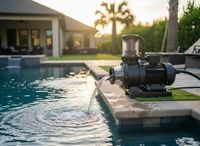
Even properly balanced water can develop algae if it isn't circulating effectively. Water should move continuously through the filtration system so chemicals reach every part of the pool. Dead spots behind ladders, steps, corners, and water features often become the first places where algae develops. If circulation is poor, algae has an opportunity to grow before sanitizers reach affected areas.

Why-your-Pool-Water-Turns-Green-and-When-to-Call-a-Pool-Service-3-geotagged.jpeg

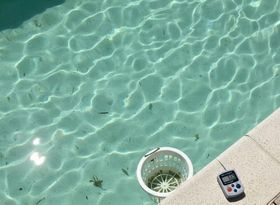
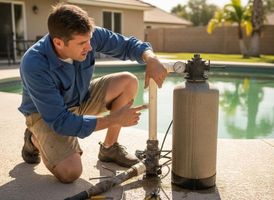
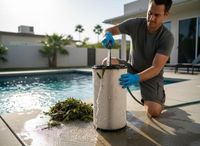
Dirty or Inefficient Filters

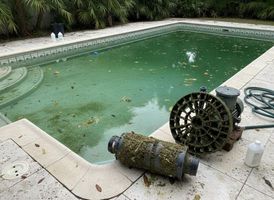
Your filter removes dirt, organic material, and microscopic particles from the water. A clogged or dirty filter reduces water flow and prevents proper filtration. As debris accumulates, water quality declines and algae becomes more likely to develop. Regular filter cleaning is one of the simplest ways to prevent green water.

Why-your-Pool-Water-Turns-Green-and-When-to-Call-a-Pool-Service-4-geotagged.jpeg

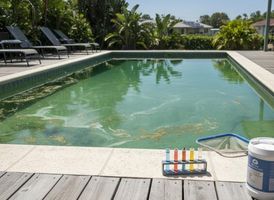
Unbalanced Water Chemistry

Many homeowners focus only on chlorine, but chlorine works best when the rest of the water chemistry is balanced. Important factors include:

  • · pH
  • · Total alkalinity
  • · Calcium hardness
  • · Cyanuric acid (stabilizer)

When these levels fall outside their recommended ranges, chlorine becomes less effective, allowing algae to multiply even when chlorine appears to be present.

Why-your-Pool-Water-Turns-Green-and-When-to-Call-a-Pool-Service-5-geotagged.jpeg

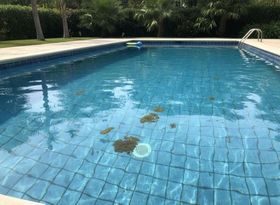
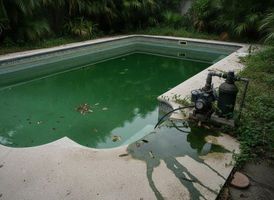
Debris and Organic Matter

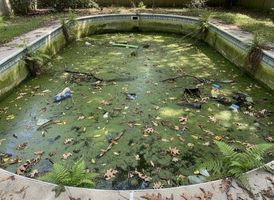
Leaves, pollen, grass, dirt, and insects all introduce organic material into your pool. As this debris decomposes, it consumes chlorine and creates conditions that encourage algae growth. Pools located near trees or exposed to frequent wind often require additional cleaning to stay ahead of algae.

Common DIY Mistakes That Make Green Pools Worse

Many homeowners try to solve green water immediately by purchasing multiple pool chemicals. Unfortunately, this often makes recovery more difficult.

Common mistakes include:

  • · Adding several chemicals without testing the water
  • · Shocking the pool repeatedly without identifying the cause
  • · Ignoring pH and alkalinity
  • · Running the pump for only a few hours
  • · Forgetting to brush pool walls where algae attaches
  • · Stopping treatment too early because the water looks slightly better

Common Field Observations: Pool professionals frequently encounter backyards where homeowners have added multiple rounds of "shock" from big-box stores without testing the baseline water chemistry first. This often inadvertently skyrockets cyanuric acid (stabilizer) levels, causing a phenomenon known as "chlorine lock" where the sanitizer becomes completely ineffective. Another frequent error is turning the filtration pump off or running it for just a couple of hours to save on electricity while trying to clear a bloom, which leaves the water stagnant and accelerates algae growth.

How Professional Pool Service Diagnoses Green Water

Every green pool is different. A professional should determine why the water turned green before recommending treatment. A systematic approach helps solve the actual problem instead of treating only the symptoms.

The Professional Inspection Process: A standard, comprehensive evaluation for a green pool typically follows a strict diagnostic order to eliminate guesswork:

Why-your-Pool-Water-Turns-Green-and-When-to-Call-a-Pool-Service-6-geotagged.jpeg

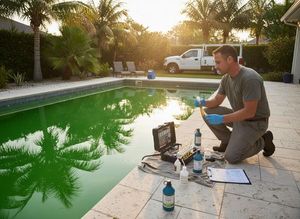
1. Complete Water Chemistry Test

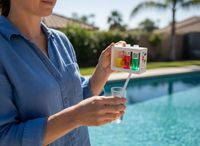
A full digital analysis to check the entire chemical footprint, specifically looking at stabilizer, pH, and alkalinity levels.

Why-your-Pool-Water-Turns-Green-and-When-to-Call-a-Pool-Service-7-geotagged.jpeg

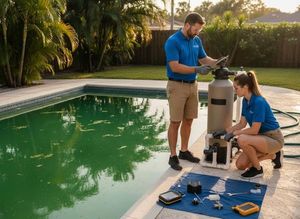
2. Filtration System Evaluation

An inspection of the filter elements to check if cartridges or DE grids are torn, clogged, or chemically compromised.

Why-your-Pool-Water-Turns-Green-and-When-to-Call-a-Pool-Service-8-geotagged.jpeg

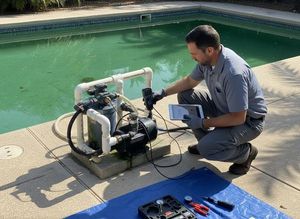
3. Hydraulic Flow & Equipment Check

An assessment of the pump and motor to ensure the system is pulling adequate flow, operating at correct pressures, and not drawing air through plumbing leaks.

Why-your-Pool-Water-Turns-Green-and-When-to-Call-a-Pool-Service-9-geotagged.jpeg

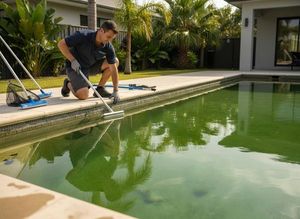
4. Physical Surface Assessment

An examination of the pool walls and floor to determine the specific type of algae growth (such as green, mustard, or black algae) before deploying a chemical treatment plan.

Green Water Isn't Always Algae

Although algae is the most common cause of green water, it isn't the only possibility.

Sometimes green water results from metals such as copper or iron entering the water supply. Certain algaecides or deteriorating equipment can also introduce metals that create a green tint. In these situations, adding more chlorine may actually make the discoloration worse. Accurate water testing is essential before deciding on treatment.

An Illustrative Example: Imagine a pool that suddenly develops a translucent, emerald-green tint, yet the walls aren't slimy or covered in visible growth. This scenario is often caused by copper oxidation rather than algae. If a pool has a low pH environment and a copper-based chemical is added, the metal can react and tint the water. In a situation like this, adding heavy amounts of chlorine can actually cause the metals to oxidize further, setting severe, permanent stains into the pool plaster.

When You Can Handle the Problem Yourself

Some green pools respond well to prompt homeowner intervention. DIY treatment may be appropriate when:

Why-your-Pool-Water-Turns-Green-and-When-to-Call-a-Pool-Service-10-geotagged.jpeg

The water has only a slight green tint.

1782870447606/image_0.jpeg

Equipment is operating correctly.

Why-your-Pool-Water-Turns-Green-and-When-to-Call-a-Pool-Service-12-geotagged.jpeg

Water chemistry is only slightly out of balance.

Why-your-Pool-Water-Turns-Green-and-When-to-Call-a-Pool-Service-13-geotagged.jpeg

Algae has not spread across the pool surfaces.

Why-your-Pool-Water-Turns-Green-and-When-to-Call-a-Pool-Service-14-geotagged.jpeg

The problem is addressed immediately.

Testing the water, balancing chemistry, brushing surfaces, cleaning the filter, and maintaining continuous circulation often restore lightly affected pools.

When It's Time to Call a Pool Service

Professional service is usually the better option when:

Why-your-Pool-Water-Turns-Green-and-When-to-Call-a-Pool-Service-15-geotagged.jpeg

The water has become dark green or completely opaque.

Why-your-Pool-Water-Turns-Green-and-When-to-Call-a-Pool-Service-16-geotagged.jpeg

You can't see the bottom of the pool.

Why-your-Pool-Water-Turns-Green-and-When-to-Call-a-Pool-Service-17-geotagged.jpeg

Multiple chemical treatments have failed.

Why-your-Pool-Water-Turns-Green-and-When-to-Call-a-Pool-Service-18-geotagged.jpeg

Algae keeps returning.

Why-your-Pool-Water-Turns-Green-and-When-to-Call-a-Pool-Service-19-geotagged.jpeg

The pump or filter isn't working properly.

Why-your-Pool-Water-Turns-Green-and-When-to-Call-a-Pool-Service-20-geotagged.jpeg

Water chemistry remains unstable.

Why-your-Pool-Water-Turns-Green-and-When-to-Call-a-Pool-Service-21-geotagged.jpeg

You suspect equipment problems or leaks.

Why-your-Pool-Water-Turns-Green-and-When-to-Call-a-Pool-Service-22-geotagged.jpeg

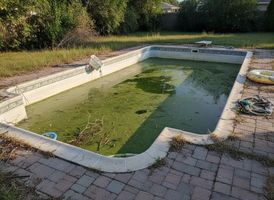
The pool has been neglected for several weeks.

When to Pause DIY Efforts: A good rule of thumb for homeowners is that if you have shocked the pool twice and run the filtration system continuously for 48 hours without seeing a noticeable shift toward cloudy blue or gray, it is usually time to halt DIY treatments. At that stage, the issue typically stems from an underlying filtration failure, high stabilizer levels, or a severe bloom requiring commercial-grade remedies. Continuing to guess can risk damaging pool surfaces and wasting money on ineffective chemicals.

Think your pool has a hidden leak? Click here.

Preventing Green Pool Water

Why-your-Pool-Water-Turns-Green-and-When-to-Call-a-Pool-Service-23-geotagged.jpeg

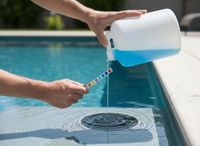
Testing water regularly

Why-your-Pool-Water-Turns-Green-and-When-to-Call-a-Pool-Service-24-geotagged.jpeg

Maintaining proper sanitizer levels

Why-your-Pool-Water-Turns-Green-and-When-to-Call-a-Pool-Service-25-geotagged.jpeg

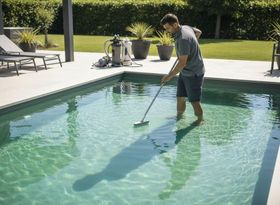
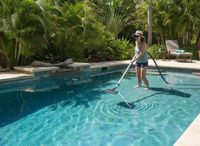
Brushing walls and steps weekly

Why-your-Pool-Water-Turns-Green-and-When-to-Call-a-Pool-Service-26-geotagged.jpeg

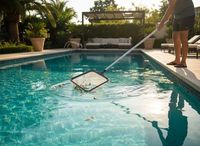
Skimming leaves and debris

Why-your-Pool-Water-Turns-Green-and-When-to-Call-a-Pool-Service-27-geotagged.jpeg

Vacuuming the pool

Why-your-Pool-Water-Turns-Green-and-When-to-Call-a-Pool-Service-28-geotagged.jpeg

Cleaning the filter as recommended

Why-your-Pool-Water-Turns-Green-and-When-to-Call-a-Pool-Service-29-geotagged.jpeg

Running the pump long enough for complete water circulation

Why-your-Pool-Water-Turns-Green-and-When-to-Call-a-Pool-Service-30-geotagged.jpeg

Scheduling regular professional maintenance

Recommended Southern California Maintenance Guidelines: Due to the intense sunshine and climate conditions in Los Angeles and Ventura County, a standard recommendation is to run pool pumps for at least 8 to 10 hours a day during the spring and summer months, ideally during peak daylight hours when algae growth is most active. For a reliable routine in areas like Calabasas, Malibu, or Westlake Village, industry experts suggest a strict weekly maintenance schedule: testing and balancing chemicals every 7 days, brushing the entire pool shell weekly to disrupt microscopic algae spores, emptying all baskets, and deep-cleaning filter cartridges or backwashing the system every 3 to 6 months depending on wind-blown debris.

Read more maintenance tips at https://clearwaterpoolserviceinc.com/blog/common-pool-maintenance-issues-and-solutions.

Common Myths About Green Pool Water

myth icon.png

Myth: More chlorine always fixes the problem. Without correcting water balance, circulation, or filtration, chlorine alone often won't solve the issue.

myth icon.png

Myth: Clear water means healthy water. A pool may look clean while still having improper chemical balance or inadequate sanitizer.

myth icon.png

Myth: Weekly maintenance isn't necessary. Algae often develops gradually. Consistent maintenance helps detect problems before they become expensive repairs.

myth icon.png

Myth: Every green pool needs the same treatment. The correct solution depends on the underlying cause, which is why proper testing is essential.

The Biggest Misconception: One of the most common misunderstandings among pool owners is believing that clear water equals healthy water. A pool can appear crystal clear while suffering from a dangerously low pH or zero active sanitizer, leaving it highly vulnerable to a sudden algae bloom after a hot afternoon or a heavy weekend pool party.

Why Southern California Pools Need Extra Attention

Pools throughout Los Angeles and Ventura County face unique conditions that increase maintenance demands. Extended warm weather, heavy pool use, fine dust, pollen, Santa Ana winds, and falling debris all place additional strain on water chemistry and filtration systems. Routine maintenance becomes even more important during the warmer months, when algae can develop quickly if sanitizer levels fall or circulation decreases.

Final Thoughts

Green pool water is usually a warning sign that something in your pool's maintenance system needs attention. Whether the cause is algae, poor circulation, unbalanced chemistry, or equipment problems, identifying the underlying issue is the first step toward restoring clean, healthy water.

While minor problems may respond to early intervention, persistent or severe green water often requires professional diagnosis and treatment. Addressing the problem promptly helps protect your pool equipment, reduces chemical waste, and keeps your pool safe and ready to enjoy.

Choosing Consistent Care: Reliable, proactive maintenance is universally recognized as the most cost-effective way to protect a pool investment and avoid the stress of a neglected, unswimmable pool.

If you are looking for dependable, hassle-free weekly maintenance or equipment support in Los Angeles and Ventura Counties, Clear Water Pool Service Inc is here to help. Contact us today at (661) 607-7906 to schedule a free consultation and estimate. Ask about our Two-Week Free Trial for new clients and take $50 off your first month of weekly service to ensure your pool stays clear, safe, and ready to enjoy all year long.